Php-echo-the-title-3 đź‘‘

When echoing titles, security is paramount. While WordPress's core function handles basic sanitization, developers often wrap the output in escaping functions to prevent Cross-Site Scripting (XSS) attacks, especially when the title is used inside an attribute. echo esc_attr( get_the_title() ); Escaping for HTML: echo esc_html( get_the_title() ); Implementation Example

If you are working with a specific post ID (often represented by the "3" in specific coding exercises), you must use the return-based function to target that specific entity: php-echo-the-title-3

: This function returns the string. This is used when you need to manipulate the title in PHP (e.g., character limits or conditional logic) before displaying it. Example: echo ' ' . get_the_title() . ' '; 2. Handling Titles Outside the Loop When echoing titles, security is paramount

In the context of WordPress development, is the standard function used to display the title of a post or page within "The Loop." While the specific string "php-echo-the-title-3" is likely a custom identifier or a numbered step in a tutorial, it refers to the foundational practice of outputting page headers dynamically. Understanding the Core Function This is used when you need to manipulate the title in PHP (e

Use code with caution. Copied to clipboard

One of the most common points of confusion for developers at "Level 3" of their learning is the difference between the_title() and get_the_title() .

: This function includes an internal echo . You do not need to type echo the_title(); because it handles the output for you.
Examens
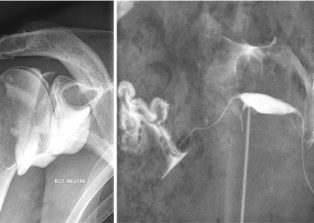
  • Radiographie de contraste

    Les rayons X permettent de différencier les structures ...

    EOS

    EOS est un appareil de radiographie innovant qui ...

    IRM

    Imagerie par Résonance Magnétique.L’IRM est une technique permettant ...

  • Mammographie

    La mammographie est un examen radiologique utilisant des ...

    Echographie

    L’échographie utilise les ultrasons. Ceux-ci sont émis par ...

    Scanner

    Cet appareil utilise un émetteur de rayons X ...

  • OstĂ©odensitomĂ©trie

    Cet examen utilise des rayons X Ă  dose ...

    Radiologie interventionnelle

    L’activité principale des radiologues consiste à interpréter des ...

    Radiologie générale

    Le passage des rayons X Ă  travers un ...

  • Radiologie dentaire

    Le panoramique dentaire ou orthopantomogramme (OPG) est une ...

When echoing titles, security is paramount. While WordPress's core function handles basic sanitization, developers often wrap the output in escaping functions to prevent Cross-Site Scripting (XSS) attacks, especially when the title is used inside an attribute. echo esc_attr( get_the_title() ); Escaping for HTML: echo esc_html( get_the_title() ); Implementation Example

If you are working with a specific post ID (often represented by the "3" in specific coding exercises), you must use the return-based function to target that specific entity:

: This function returns the string. This is used when you need to manipulate the title in PHP (e.g., character limits or conditional logic) before displaying it. Example: echo ' ' . get_the_title() . ' '; 2. Handling Titles Outside the Loop

In the context of WordPress development, is the standard function used to display the title of a post or page within "The Loop." While the specific string "php-echo-the-title-3" is likely a custom identifier or a numbered step in a tutorial, it refers to the foundational practice of outputting page headers dynamically. Understanding the Core Function

Use code with caution. Copied to clipboard

One of the most common points of confusion for developers at "Level 3" of their learning is the difference between the_title() and get_the_title() .

: This function includes an internal echo . You do not need to type echo the_title(); because it handles the output for you.